Tony Wu Studio | Shutterstock
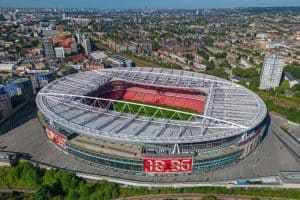
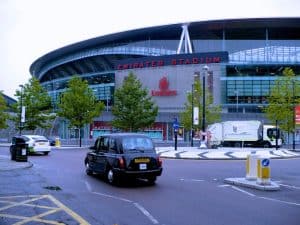
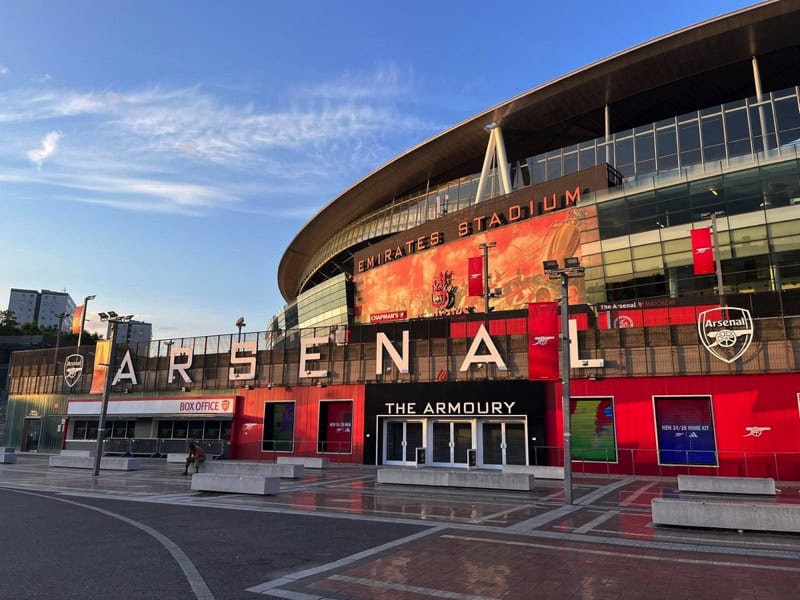
Amazing as it may seem, Arsenal have now been at the Emirates for over 20 years. (Is it just us who think of it as the new stadium?) The Emirates Stadium is known as the Arsenal Stadium during UEFA competitions such as the Champions League. Somewhat confusingly, Arsenal Stadium was also the official name of the Gunners’ old home, which was more commonly known as Highbury.
In this article, we are looking primarily at the new stadium (there we go again!), which opened in 2006 after ground was broken at the start of 2004. It was built at a cost of £390m. That may not seem like much compared to the estimated £1bn construction cost of the Tottenham Hotspur Stadium, or the £750m of Everton’s Hill Dickinson Stadium, but it was certainly a very significant outlay in the early years of the new millennium.
Indeed, the stadium cost was often cited as the main reason why the Gunners could not compete in the transfer market. Thankfully, those days are behind us now, but just what did Arsenal get for the nearly £400m they spent in building the Emirates?
60,704 Capacity at a Cost of £6,424.62 Per Seat
We didn’t want to be overly precise and say that each seat at the Emirates cost £6,424.6178176 to build, so we rounded it up to the nearest penny. Pennies don’t matter all that much when you’ve spent £390,000,000.
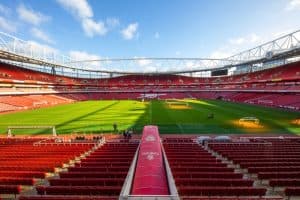
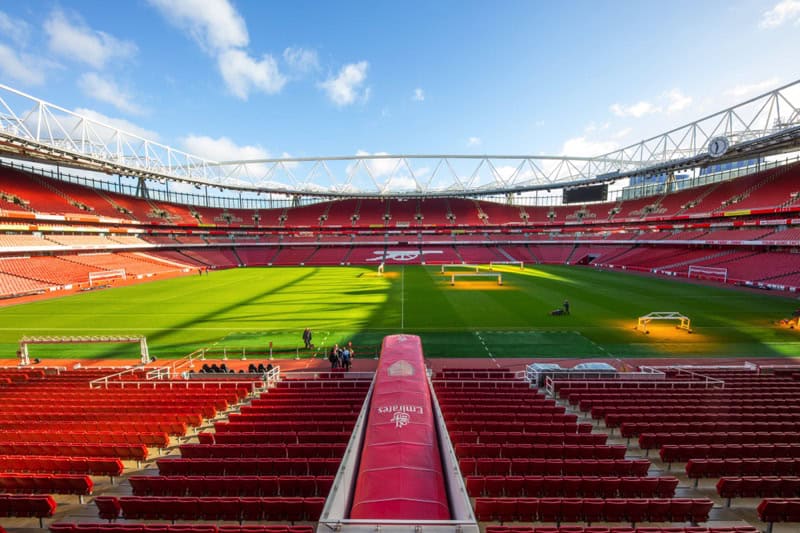
For those that can’t be bothered to attempt a bit of algebra and work it out, the capacity of Arsenal’s current stadium, as of 2025/26, is 60,704 (although there are plans afoot to extend it to 70,000, or even more). That is what £390m got Arsenal back in 2006.
Back then, the Gunners were competing on a regular basis with Manchester United. Highbury held just over 38,000 in its final season, and demand for tickets was far higher. A new stadium was essential to help the Gunners compete financially with Man United and a newly rich Chelsea. Highbury was a grand old stadium but it was showing its age and lacked the range of corporate facilities that were needed for the club to really maximise its earning potential.
Financial Benefit
Moving to the Emirates meant that the Gunners were able to sell around 22,000 extra tickets per home game. With 19 league fixtures plus games in two domestic cups and Europe, the club might be looking at selling an extra 600,000 or more tickets per season. If we work on a highly conservative estimate of £70 per ticket, that equates to an additional £42m per year.
Such a figure is a very rough estimate, however, and does not take into account the huge increase in premium and corporate facilities at the Emirates. These generate far higher revenue per “ticket”. When we include the extra food and drink sales, merchandise and stadium naming rights, it is clear that the move revolutionised Arsenal’s finances.
Expansion Plans
Some 20 years on from the move to the Emirates, plans for expansion have been mooted for some time. There is a huge waiting list for season tickets and despite price increases, the club could sell many more tickets. Towards the end of 2025, Arsenal revealed that they hoped to increase the capacity to 70,000, a move which would mean more income, more fans being able to watch their team and, hopefully, an even better atmosphere.
Biggest 10 English Football Stadia by Capacity

With a capacity of 60,704, the Emirates is a clear upgrade on Highbury. But how does it rank in terms of the Premier League and English football generally? Below are the 10 biggest football stadiums in the country. Note that the information is correct as of June 2026, and is sure to change with clubs expanding their capacities, redeveloping certain stands, tweaking the layout or even building new grounds entirely. Man United, for example, are purportedly set to build a new ground with a capacity of 100,000!
- Wembley, 90,000 – The national stadium is used for several sports but is primarily a football facility. The home of the England national teams and the FA Cup, it is one of the iconic grounds of the world.
- Old Trafford, 74,310 – Man United’s home may be crumbling and its leaky roof the subject of mockery but it is the third biggest stadium in the UK, with only Wembley and rugby facility Twickenham having a larger capacity.
- Tottenham Hotspur Stadium, 62,850 – London’s largest club stadium is the second biggest in the Premier League, for now at least. It has hosted NFL games, with more than 61,000 fans watching Jacksonville and Buffalo play in 2023. It opened in 2019.
- London Stadium, 62,500 – Rather comfortably the biggest stadium in the Championship for the 2026/27 season, West Ham’s home has not been a happy hunting ground for the Hammers. Built for the 2012 Olympics, the capacity was 80,000 for athletics, but it was altered ahead of West Ham moving there in 2016.
- Etihad Stadium, 61,470 – When the Etihad opened, initially as the City of Manchester Stadium, the capacity was 38,000, and it was built for the 2002 Commonwealth Games. Extra trackside seating was added to allow 41,000 to watch the Games. City took over for the 2003/04 Premier League season and the ground has been altered several times since then. The newly christened and extended Pep Guardiola (North) Stand opened for the final game of the 2025/26 campaign. A record 60,332 attended, with the capacity often stated by the club as “over 61,000”, sometimes “over 60,000”, and some sources claiming “over 62,000”.
- Anfield, 61,276 – Anfield has been redeveloped several times over the years, with the latest expansion (to the Anfield Road Stand) finished and certified in 2025. No further expansion is planned but the club may seek to modernise what is, in places, a tired stadium.
- Emirates Stadium, 60,704 – The record attendance at the Emirates stands at 60,383, coming against Wolves in 2019. The ground has been home to Arsenal’s women as well as the men since 2024.
- Hill Dickinson, 52,769 – Everton’s new ground was first used in the Premier League on the 24th of August 2025. The Toffees started with a 2-0 win over Brighton but they only managed five more league wins there in their first season at their new home. Within the first 12 months of opening the new stadium was used for international rugby league and union, international football and golf.
- St James’ Park, 52,264 – Newcastle’s home has been St James’ Park since 1892 and it occupies a prime location on the edge of the city centre. It has been expanded several times but the club are exploring the possibility of a new stadium on an alternative site.
- Stadium of Light, 48,707 – Sunderland’s home is one of the older “new” stadia, with the club moving from Roker Park for the start of the 1997/98 season. It held 42,000 people back then but expansion in 2,000 took it to almost 49,000, although 60,000 have packed into the stands and onto the pitch for concerts, including Ed Sheeran.
While the Emirates is obviously among the biggest football stadia in England, it now lags behind the capacity of several other clubs. With the financial impact of being able to sell more tickets and house more hospitality facilities very clear, it is easy to see why Arsenal are looking to expand, especially with demand for seats only set to rise now the team is achieving success on the pitch.